Treating Pitted Acne Scars with Microneedling: From Choosing the Right Candidate to Aftercare and Effective Combinations
Treating Pitted Acne Scars with Microneedling
Pitted acne scars (atrophic acne scars) are among the most common reasons for dissatisfaction with the appearance of the skin; even when there are no longer any active breakouts, skin unevenness becomes more visible in lighting and photos. Treating pitted acne scars with microneedling is a sensible option for many people because it is considered a minimally invasive procedure, the recovery period is usually shorter than with more invasive methods, and it can gradually make skin texture more even by stimulating collagen production.
An important point is that microneedling is not a “one-session miracle.” Its results are gradual, and the skin usually needs several weeks to several months to regenerate. If you have realistic expectations and treatment is performed under a physician’s supervision with an appropriate plan, it can create a noticeable improvement in the appearance of indentations.
| Method | Best Use | Main Benefit | Limitation/Important Note |
|---|---|---|---|
| Microneedling | Mild to moderate depressed scars, uneven texture | Minimally invasive, suitable for most skin types, short recovery | Gradual results; may not be sufficient for very deep scars |
| Microneedling + PRP | Enhanced healing, improved skin quality, and improvement of some scars | May enhance the collagen-building response in some individuals | Depends on individual circumstances and the physician’s assessment |
| Subcision (scar release) | Adherent, depressed scars (especially rolling scars) | Releases adhesions beneath the skin | May cause more bruising/swelling than microneedling |
| CO2 laser fractional | Deeper/older scars, skin resurfacing | Deeper resurfacing effect | Requires more careful aftercare; risk of hyperpigmentation/prolonged redness in some individuals |
| Filler | Some distinct indentations or localized volume loss | Faster visible effects in selected cases | Limited longevity; choosing the right technique and material is very important |
| Peeling/CROSS (TCA CROSS) or punch | Some very deep, narrow scars (ice pick) | Precise targeting of specific scars | Not suitable for all scars; the scar type must be correctly diagnosed |
If you would like to be evaluated at Gooneh Clinic to assess your scar type and choose the best treatment combination, you can schedule a consultation through the Contact Us / Appointment Booking / Clinic Address page.
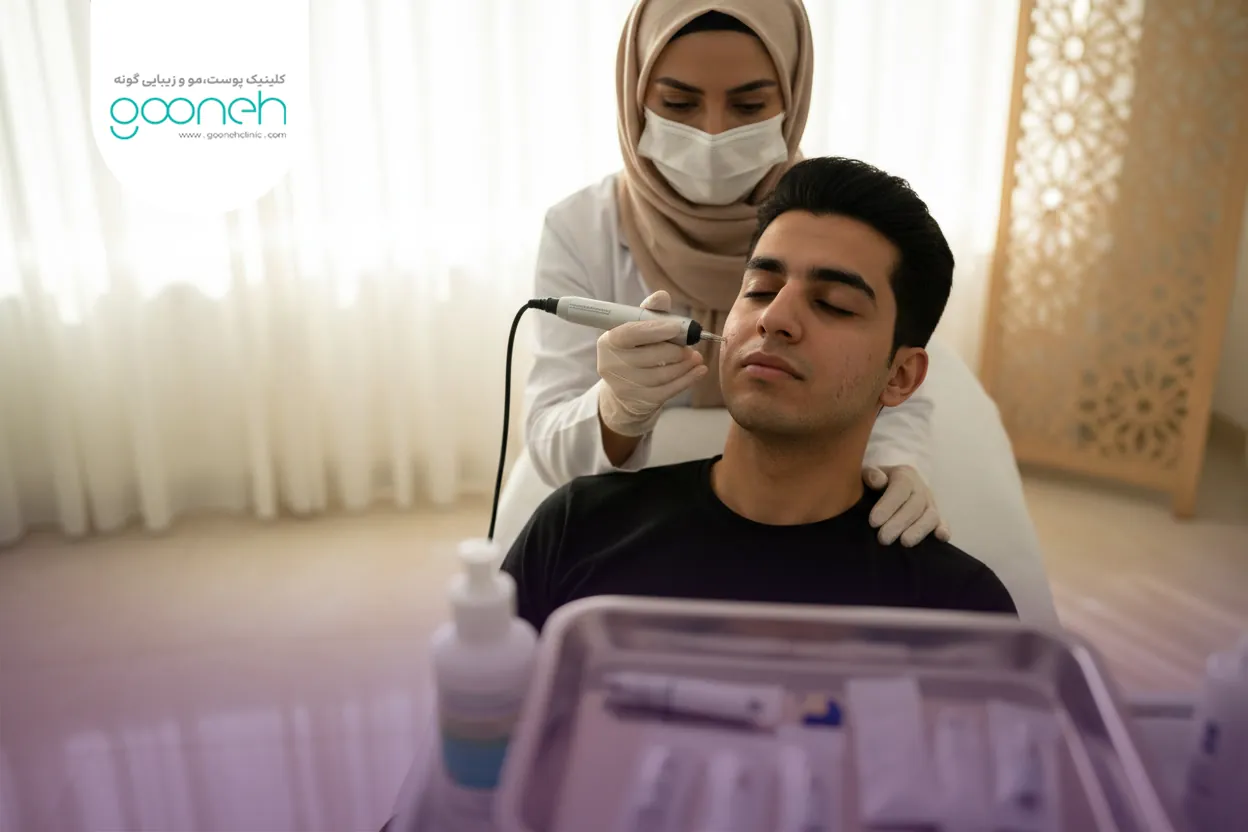
What Exactly Does Microneedling Do for Pitted Acne Scars?
During microneedling, very fine, controlled needles create microchannels on the skin’s surface. This very small, controlled injury triggers the body’s healing phase and leads it to produce more collagen and elastin (the main proteins responsible for skin firmness and flexibility) over the following weeks. The result of this process may include:
- Gradual smoothing of uneven texture
- Improved skin texture and reduced appearance of pores
- Reduced depth of some indentations
- Improved radiance and overall skin quality (in suitable candidates)
Sometimes, serums and strengthening agents or combination methods (such as PRP or even RF in certain devices) are used alongside microneedling to create a stronger healing response. The choice of these options should be based on your skin type, scar type, and medical history.
Why Do Acne Scars Become Depressed? (Simple and Practical)
When acne lesions—particularly inflammatory and deep ones—damage the deeper layers of the skin, the body produces collagen to repair the injury. If this repair is incomplete or unbalanced, then:
- Too little collagen may be produced, leaving the acne scar depressed (an atrophic scar)
- Or, in some people, excessive collagen may be produced, resulting in a raised scar (hypertrophic/keloid)
Microneedling is generally more beneficial for depressed scars and is not always the first choice for raised scars.
Which Types of Pitted Acne Scars Respond Better to Microneedling?
To achieve an acceptable treatment outcome, the scar type must be diagnosed correctly. The most common types of depressed acne scars include:
1) Rolling Scars
These scars are wave-like with soft edges and are usually caused by adhesions beneath the skin. Microneedling can help, but in many cases, a combination with subcision produces better results because the adhesions must first be released.
2) Boxcar Scars
These are indentations with more defined edges. Microneedling can be helpful for mild to moderate cases; however, if they are deep, other or combination treatments (such as fractional laser or more targeted approaches) may be considered.
3) Ice Pick Scars
These scars are narrow and deep, like needle punctures. Microneedling alone is usually less effective, and the physician may recommend more specific methods such as CROSS or punch techniques.
Who Is a Good Candidate for Treating Pitted Acne Scars with Microneedling?
In general, if you have one of the following conditions, you are likely a suitable candidate (although the final decision rests with the physician):
- Mild to moderate depressed scars
- Skin without severe, uncontrolled active acne
- Realistic expectations of the outcome (significant improvement, not necessarily complete removal)
- Time to attend several sessions and follow aftercare instructions after each session
Who Should Postpone Microneedling for Now?
In the following situations, microneedling may need to be postponed or may not be an appropriate option:
- Presence of severe active inflammatory acne in the treatment area (it should be controlled first)
- Skin infection, active cold sores, or open wounds
- History of severe raised scars/keloids (requires careful evaluation)
- Use of certain medications or medical conditions that impair wound healing (must be assessed by a physician)
- Pregnancy or breastfeeding: many aesthetic procedures require caution during this time, and the decision should be made with a physician
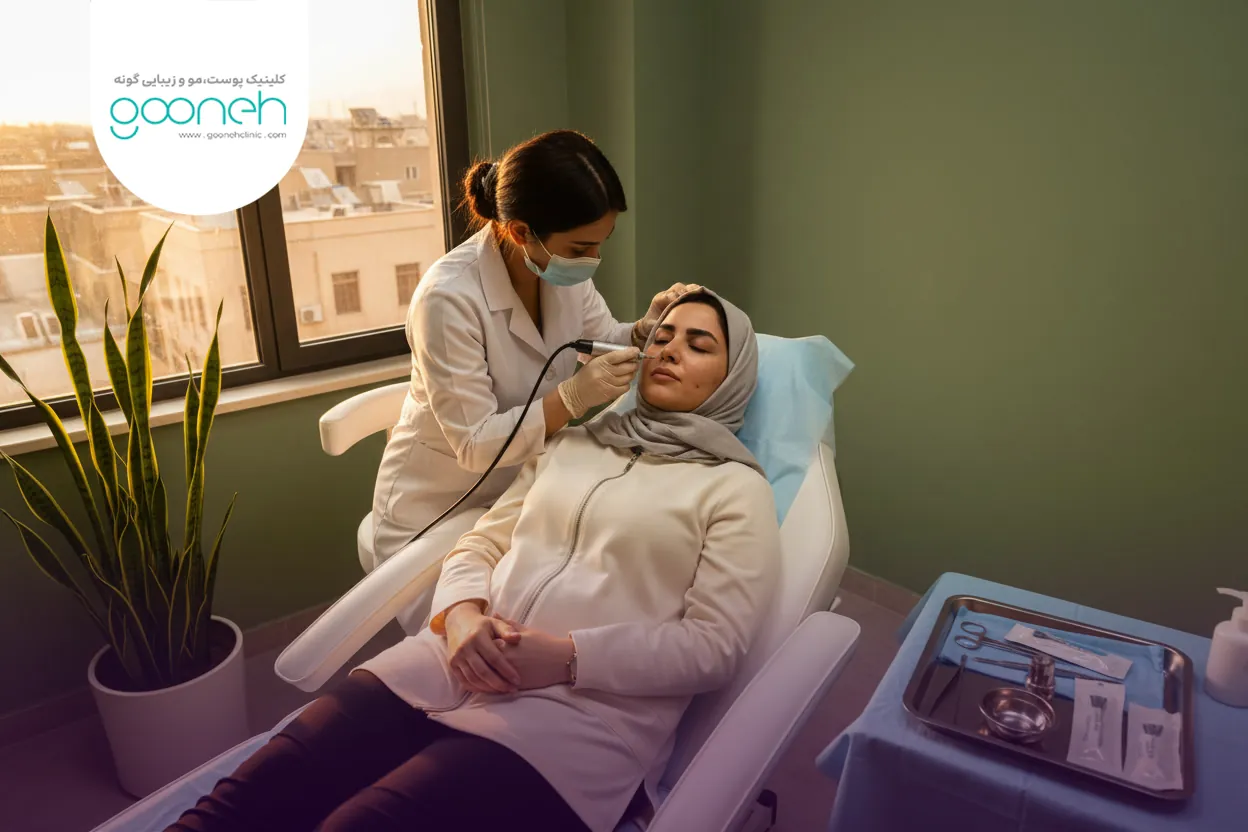
Steps of Treating Pitted Acne Scars with Microneedling (Step by Step)
The exact process varies depending on the physician’s protocol and the type of device, but the general pathway is usually similar to the following:
- Skin and scar assessment: The scar types are determined, as well as whether combination treatment is needed.
- Photography or condition documentation: To compare treatment progress in later sessions.
- Skin cleansing and disinfection: To reduce the risk of inflammation and infection.
- Topical anesthesia: Usually performed with a numbing cream to minimize discomfort.
- Microneedling procedure: The device is moved over the skin to create controlled tiny punctures. The treatment intensity and depth must be adjusted according to scar type and the skin’s tolerance.
- Use of serums/supportive agents if needed: Some protocols use strengthening agents or PRP based on the physician’s assessment.
- End of session and immediate aftercare: The skin usually becomes red and slightly swollen, and aftercare instructions are provided.
The total duration of each session (including numbing) may range from a short to moderate period, with the main procedure sometimes taking about 20 to 30 minutes; however, the exact time depends on the size of the treatment area and skin sensitivity.
How Many Microneedling Sessions Are Needed for Acne Scars?
For depressed scars, treatment is usually planned as multiple sessions. For many individuals with mild to moderate indentations, approximately 3 to 6 sessions may be needed, typically spaced 4 to 6 weeks apart to allow the skin time to heal.
If scars are deeper, older, or mixed, more sessions may be needed, or the physician may recommend combination treatment rather than excessively increasing the number of sessions (for example, subcision + microneedling or microneedling + laser).
When Will You See Results?
The beauty of microneedling is that the skin is genuinely regenerating; however, this same feature means that results are not overnight. Usually:
- From around one to two weeks later, overall skin quality (softness/radiance) may appear improved.
- Seeing a clearer improvement in indentations requires several sessions and time.
- For some individuals, results may continue to develop for several months after treatment begins.
Comparing Microneedling and Laser for Pitted Acne Scars
Many clients wonder, “Is microneedling better or laser?” There is no single answer for everyone because the best option depends on your scar type, skin tone, depth of indentations, and lifestyle.
Microneedling is usually a good choice when:
- Scars are mild to moderate
- You are looking for a less invasive method with lower risk
- You prefer a shorter recovery period
Laser treatment (especially fractional laser) is generally more strongly considered when:
- Scars are deeper or more resistant
- More substantial skin resurfacing is needed
- The physician can select safe and appropriate settings according to your skin type
In many cases, the best results come not from choosing just “one” method, but from the right combination of approaches; for example, releasing adherent scars with subcision and then rebuilding texture with microneedling, or completing treatment with laser.
Side Effects and Risks of Microneedling for Acne Scars
When performed properly, microneedling is generally considered a safe, low-risk procedure. However, like any skin treatment, it may have side effects, and knowing about them can help with decision-making:
- Redness and inflammation (common and usually temporary)
- Burning or warmth similar to a mild sunburn
- Mild bruising in some skin types
- Dryness or mild flaking for a few days
- Darkening or hyperpigmentation in susceptible individuals (often preventable with proper care and sunscreen)
More serious risks (such as infection) are generally more likely when the procedure is performed in a non-medical setting, equipment is not sterile, or post-treatment care is not taken seriously.

Pre-Microneedling Care (For Better Results and Lower Risk)
Before starting treatment, it is best to coordinate these guidelines with your physician (they may vary depending on your skin):
- If you have active acne, take your acne-control plan seriously first.
- If you have a history of cold sores, be sure to tell your physician before the session.
- A few days before the session, avoid intense sun exposure, tanning beds, and tanning.
- Follow your physician’s advice regarding at-home exfoliating products, retinoids, or acids (they may need to be temporarily discontinued).
- If you take any specific medication or have a history of medical conditions (such as bleeding problems, impaired wound healing, or allergies), be sure to disclose it.
Post-Microneedling Care for Treating Pitted Acne Scars
An important part of treatment success depends on aftercare following each session. For most people, following these tips helps reduce inflammation and prevent hyperpigmentation:
What You Should Do
- For the first few hours, do not touch or manipulate the skin, and keep it clean.
- Use the repairing/moisturizing creams recommended by your physician.
- Take sunscreen seriously (especially after the initial redness subsides). Sun exposure can increase the risk of hyperpigmentation.
- If you have redness, a gentle cool compress (as advised by your physician) may help.
What You Should Avoid
- Avoid makeup for approximately 12 hours (or as advised by your physician).
- Avoid strenuous exercise, saunas, hot tubs, and excessive sweating for at least 24 to 48 hours.
- Do not pick at flaking skin or put pressure on your skin.
- Do not use strong exfoliating or brightening products without consulting your physician.
What Factors Affect the Cost of Treating Pitted Acne Scars with Microneedling?
To make an informed and practical decision, it is helpful to know that microneedling costs are not fixed or the same for everyone and depend on the following factors:
- Severity and type of scars (mild, moderate, deep, and adherent)
- Size of the treatment area (full face or limited areas)
- Number of required sessions
- Type of device and consumables (specialized serums, PRP, etc.)
- The physician’s skill and experience and the clinic’s standards
- Possible combination techniques (such as subcision or laser)
The best way to obtain an accurate estimate is through an examination and a personalized treatment plan.
When Is Microneedling Alone Not Enough? (A Decision-Making Guide)
Sometimes, the main reason indentations persist is not merely a lack of superficial collagen; subcutaneous adhesions or a particular scar type may play a more prominent role. In these cases, the physician may recommend a combination approach. Signs that microneedling alone may not be sufficient include:
- Very deep and old scars
- Adherent scars that change shape when the skin is stretched (severe rolling scars)
- Ice pick scars (narrow and deep)
- Very little improvement after several sessions at standard intervals
In such cases, depending on the physician’s assessment, options such as microneedling + PRP, subcision, or fractional laser may be considered.
A Short Checklist for Getting the Best Results from Microneedling
- Control active acne before beginning treatment.
- For adherent scars, ask whether subcision is needed.
- Attend sessions regularly and at standard intervals (rushing to shorten the interval between sessions is usually not beneficial for the skin).
- Make sunscreen a consistent part of your routine.
- Do not manipulate the skin after treatment.
- If your skin is prone to hyperpigmentation, be sure to obtain a prevention plan from your physician.
Frequently Asked Questions
آیا درمان فرورفتگی جای جوش با میکرونیدلینگ جای جوش را کاملاً از بین میبرد؟
در بسیاری از افراد، میکرونیدلینگ باعث u003cstrongu003eبهبود قابل توجهu003c/strongu003e ظاهر اسکارهای فرورفته میشود، اما تضمین «حذف کامل» برای همه وجود ندارد. عمق اسکار، نوع آن و پاسخ بدن به کلاژن سازی تعیینکننده هستند.
چند جلسه برای درمان فرورفتگی جای جوش با میکرونیدلینگ لازم است؟
برای اسکارهای خفیف تا متوسط معمولاً حدود u003cstrongu003e۳ تا ۶ جلسهu003c/strongu003e با فاصله u003cstrongu003e۴ تا ۶ هفتهu003c/strongu003e رایج است. در اسکارهای عمیقتر ممکن است تعداد جلسات بیشتر یا درمان ترکیبی لازم شود.
آیا میکرونیدلینگ برای پوستهای تیره هم مناسب است؟
اغلب بله، اما چون برخی افراد مستعد لک پس از التهاب هستند، تنظیم عمق درمان و مراقبتهای بعد از جلسه (بهویژه ضدآفتاب و برنامه پیشگیری از لک) بسیار مهم است.