
Removing Brown Acne Marks: From At-Home Routines to Clinical Treatments
Removing Brown Acne Marks
If brown spots remain on your face or body (such as your back) after acne has healed, you are likely dealing with “post-inflammatory hyperpigmentation”; this means that more skin pigment (melanin) than normal has been produced at the site of inflammation, making the skin darker in that area. The good news is that these marks gradually fade in many people. However, if you want the process of removing brown acne marks to be faster, more effective, and lower risk, you need to focus on three areas at the same time: sun protection, proper topical treatment, and control of active acne.
At the beginning, this table helps you quickly identify what is on your skin and which approach usually works best.
| Post-acne concern | Typical appearance | Main cause | Best treatment starting point | When is a clinic needed? |
|---|---|---|---|---|
| Brown mark (PIH) | Flat, light brown to dark brown spot | Melanin buildup after inflammation | Sunscreen + gentle brightening agents (such as vitamin C and niacinamide) | If there is little change after several months of a consistent routine or the marks are very persistent |
| Red mark (PIE) | Flat redness, more common in lighter skin | Effects of inflammation and vascular changes | Anti-inflammatory ingredients + sunscreen | For persistent redness or redness accompanied by severe sensitivity |
| Depressed scar | Pits/depressions | Insufficient collagen during healing | Usually cannot be fully resolved with creams | Often requires clinical methods (such as fractional laser or microneedling) |
| Raised scar | Firm bump | Excessive collagen production | Specialist evaluation is needed | Depending on the type, specialized treatments may be required |
| Combination (marks + scars) | Both discoloration and uneven texture | Both melanin buildup and textural changes | Brightening routine + phased clinical plan | A combination of treatments is usually recommended for better results |
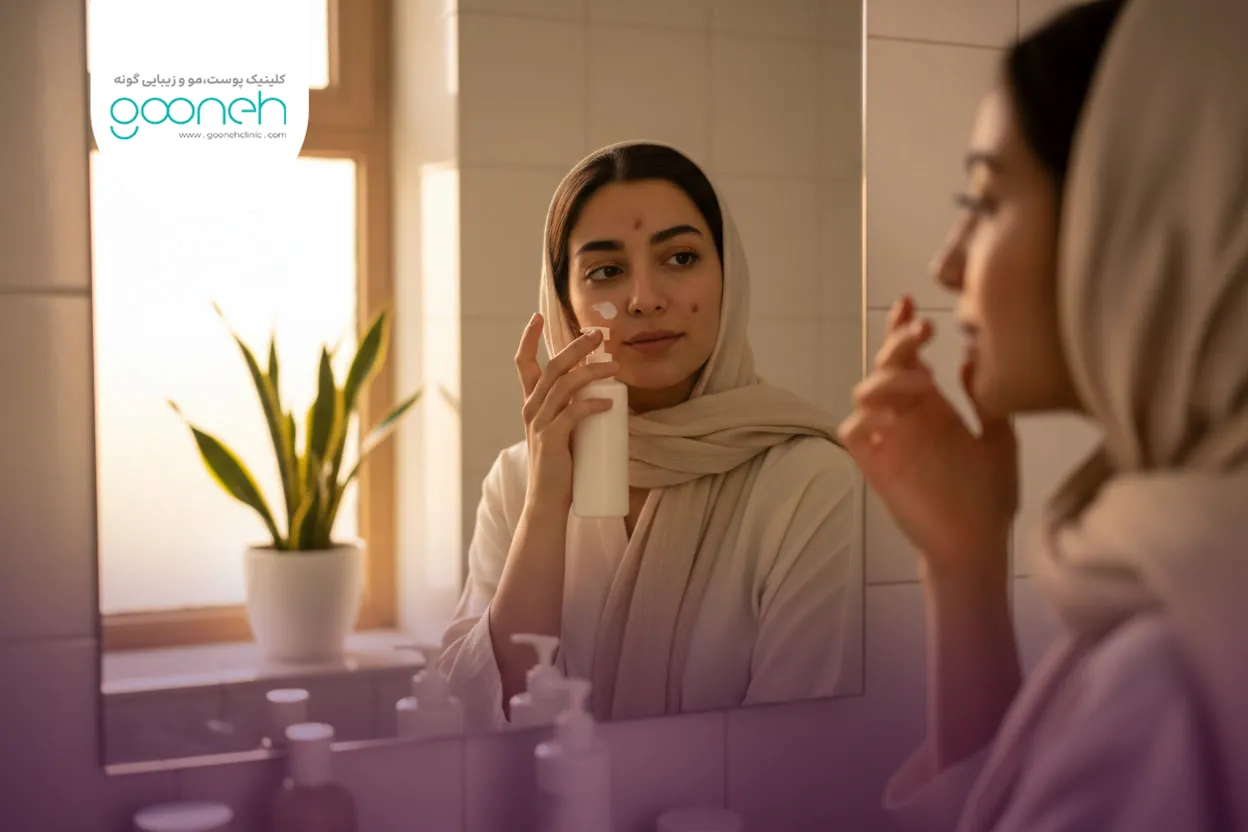
Why do brown acne marks develop?
When acne becomes inflamed, the skin enters a repair phase to heal the area. During this process, pigment-producing cells become more active in some people, and more melanin accumulates in that spot. The result is a mark that is darker than the natural skin tone. This can be worsened by the following factors:
- Sun exposure (even indirect light and light through windows); the most important factor in darkening or prolonging marks
- Picking at acne (scratching, squeezing, or harsh scrubbing)
- Prolonged inflammation (deeper or untreated acne)
- Darker skin tones (generally more prone to PIH)
- Irritation from unsuitable products (using acids/retinoids together without a plan)
What is the difference between a brown mark and an acne scar? (A common mistake)
Many people call every post-acne effect an “acne scar,” but treating discoloration differs from treating scars:
- Brown marks: the skin surface is smooth; only its color has changed. They usually fade with a brightening routine and proper care.
- Scars: the skin texture has changed (depressions or raised areas). They usually require clinical treatments, while creams play a supportive role.
If you feel unevenness when running a finger over the area, or pits are visible when light hits from the side, a significant part of the problem is likely “scarring” rather than merely discoloration.
How long does it take to remove brown acne marks?
The exact time is not the same for everyone. Some marks fade over a few months, while others—especially older, deeper marks or those repeatedly exposed to sunlight—may last longer. The key point is this: without consistent sunscreen use, almost no brightening treatment delivers lasting results.
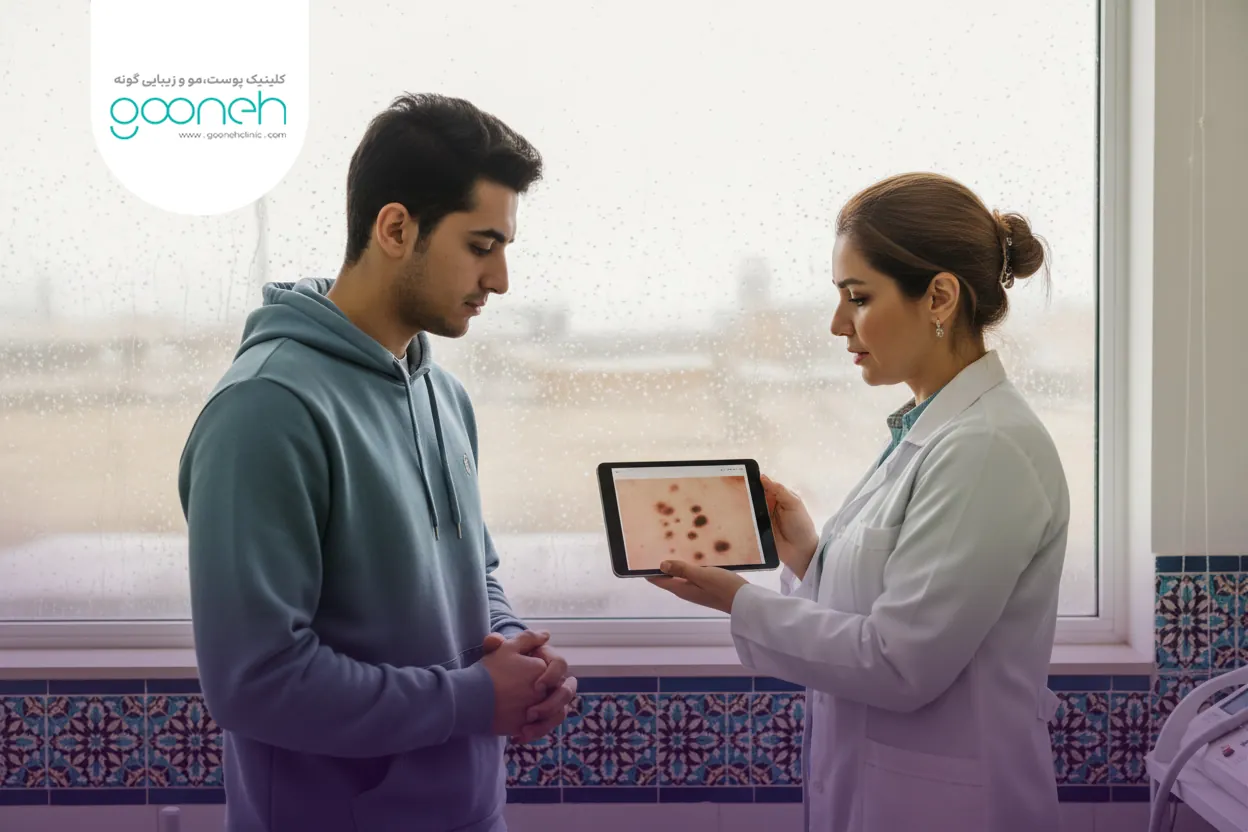
The Best Treatment Path: Start at Home or Visit a Clinic?
For most people, the best results come from “the right at-home routine + clinical treatment when needed.” If the marks are recent, a well-designed routine can usually speed up fading. But if they are old, stubborn, or accompanied by scars, clinical treatments become a more sensible option.
Step 1: Things you should stop doing today
- Squeezing and picking acne (this worsens PIH)
- Applying pure lemon juice to the skin (it is highly irritating and increases sun sensitivity)
- Using grainy, harsh scrubs
- Using several active products at once without a plan (for example, retinol + AHA/BHA on the same night)
Step 2: Sunscreen; the cornerstone of treating post-acne marks
If you take one thing seriously in your at-home treatment, let it be sunscreen. Sun exposure both darkens marks and prevents brightening products from showing their true effects. Practical tips:
- Apply sunscreen every day (even at home), especially if you are near a window.
- If you sweat heavily or are outdoors, reapplying sunscreen is important.
- Alongside sunscreen, a wide-brimmed hat and sunglasses are helpful.
Step 3: Active ingredients that are genuinely useful for brown acne marks
Instead of relying on random combinations, it is better to use a few key, understandable ingredients. The most important include:
- Vitamin C: an antioxidant and brightening ingredient that helps even skin tone.
- Niacinamide: anti-inflammatory, helps reduce marks, and can also control oil in many people.
- Azelaic acid: helps with marks and is also suitable for acne-prone and redness-prone skin.
- AHA/BHA (such as glycolic or salicylic acid): controlled exfoliation for superficial marks and clearer-looking skin.
- Retinoids/retinol: support skin renewal and the gradual fading of marks (when used carefully and according to a plan).
- Tranexamic acid: may be useful for some persistent marks.
- Arbutin/kojic acid: common brightening agents (which may cause irritation in some skin types).
- Hydroquinone: potent, but because of potential side effects and sensitivity, it is best used only under prescription and for a monitored course.
Suggested routine for removing brown acne marks (simple and practical)
This is a general framework and may need adjustment based on your skin type (oily/dry/sensitive).
Morning routine
- Gentle cleanser
- Vitamin C or niacinamide serum (choose one)
- Lightweight moisturizer
- Sunscreen
Night routine
- Cleansing (if you wear makeup/heavy sunscreen, more thorough cleansing is needed)
- One treatment product: azelaic acid or retinol or a gentle chemical exfoliant (not at the same time)
- Moisturizing and repairing product
Important note: If your skin is sensitive, start with infrequent use and increase gradually. Excessive irritation and redness slow down mark treatment.
A 6-week (numbered) plan for a consistent at-home start
- Week 1: Daily sunscreen + moisturizer only. Goal: prepare the skin and reduce irritation.
- Week 2: Add niacinamide or vitamin C in the morning.
- Week 3: Add azelaic acid at night (a few nights per week).
- Week 4: If tolerated, use a gentle exfoliant 1 to 2 nights per week (instead of azelaic acid on the same night).
- Week 5: Stay consistent; check whether the marks have faded and whether new acne is developing.
- Week 6: If the marks are persistent or you also have scars, get evaluated for a clinical plan.
At-Home Methods for Removing Brown Acne Marks: What Is Actually Worth Trying?
Many people search phrases such as “traditional medicine for removing brown acne marks” or “removing brown acne marks Nini Site” and come across masks and oils. The reality is that some home methods can provide mild help, but they are often slow and, if used incorrectly, can cause more irritation and discoloration.
Relatively low-risk home methods (when safety tips are followed)
- Aloe vera: can soothe the skin and support repair.
- Honey: mainly acts as a softening agent with mild anti-inflammatory effects.
- Ice/cold compress on inflamed acne (not on marks): helps reduce early inflammation, which itself contributes to marks.
Warning about high-risk home methods
- Lemon juice (especially undiluted or used in sunlight): can lead to irritation, burns, and more discoloration.
- Apple cider vinegar: can damage the skin if dilution and skin tolerance are not properly considered.
- Tea tree oil: may cause sensitivity and inflammation; it should be used cautiously and preferably diluted.
If you have a history of eczema, very sensitive skin, or severe redness, it is best to perform a patch test before any home treatment and discontinue the method if persistent burning/redness occurs.
If you are looking for a homemade mask
For lower-risk ideas, you can read this article: Homemade Mask for Acne and Acne Scars. Keep in mind that masks do not replace sunscreen and a treatment routine; they mainly serve as a complement.
Creams and Ointments for Removing Brown Acne Marks: How Should You Choose?
Phrases such as “ointment for removing brown acne marks” or “cream for removing brown acne marks” are widely searched, but the right answer is that rather than looking for a product name, you should look for active ingredients and choose based on your skin’s condition. Important points:
- If you still have active acne, your chosen brightening product should be compatible with acne-prone skin (for example, niacinamide/azelaic acid are usually more compatible).
- If your skin is sensitive, do not start with high percentages or several active products at the same time.
- Hydroquinone or strong brightening ingredients are best used under a doctor’s supervision.
To learn about common options and usage tips, this article may help: Ointment for Removing Brown Acne Marks.
Removing Brown Acne Marks on the Face, Body, and Back: Does Treatment Differ?
The main treatment principles are the same (reducing inflammation, inhibiting melanin production, and sun protection), but there are a few important differences:
- Facial skin is more sensitive; therefore, concentrations and frequency of use should be more conservative.
- Body and back skin is usually thicker and may tolerate some exfoliants better; however, friction from clothing, sweating, and body acne can make marks last longer.
- On the back and body, controlling active acne (for example, with a suitable cleanser and by avoiding friction) plays a major role.
Clinical Treatments for Removing Brown Acne Marks (When Home Care Is Not Enough)
If marks are old and persistent or you want faster results, clinical treatments can shorten the treatment process. The method chosen depends on the depth of the marks, skin type, presence of active acne, and history of post-inflammatory discoloration.
1) Chemical exfoliation (peeling)
In this method, special agents are used to remove superficial skin layers in a controlled manner to reduce uneven pigmentation. It can be useful for superficial marks, but it requires selecting the right peel type and careful aftercare.
2) Microdermabrasion
This is a mechanical method of superficial exfoliation. It is usually helpful for superficial marks and dull-looking skin, and it has a shorter recovery period than some other methods.
3) Microneedling (when needed and after evaluation)
It is primarily used to improve texture and mild to moderate scars, and it may also help even out skin tone. If you have extensive active, inflamed acne, the treatment may need to be postponed.
4) Laser treatment
Specialized lasers are used for some persistent marks and to simultaneously improve texture when scars are present. One well-known option in this area is co2 laser, which can help improve skin quality, uneven texture, and some marks (with a doctor’s diagnosis and proper aftercare). The type of laser and number of sessions depend entirely on a skin examination and your history of sensitivity/discoloration.
Who is a better candidate for clinical treatment?
- Old, long-lasting marks
- Widespread or very dark marks
- Marks accompanied by scarring and uneven texture
- People who have not achieved sufficient results with a consistent at-home routine
Care After Starting Treatment (At Home or in a Clinic) That Multiplies Results
Key care checklist
- Sunscreen every day and consistently
- Avoid picking at acne and peeling skin
- Moisturizing to reduce irritation and support repair
- Treating active acne (if you still have acne, controlling it is the priority)
- Patience and consistency; changes are usually gradual
Mistakes that slow down or worsen mark treatment
- Starting and stopping treatments (for example, using them for one week and abandoning them for two weeks)
- Using several active products together and causing inflammation
- Not using sunscreen or applying too little
- Expecting immediate results and constantly changing products
If brown post-acne marks return, what is the problem?
Recurrence or darkening of marks is usually due to one of these reasons:
- Sun exposure without adequate protection
- Ongoing active acne and new inflammation
- Skin irritation due to incorrect use of acids/retinoids
- Using products unsuitable for your skin type (for example, products that are too heavy or comedogenic)
Frequently Asked Questions
آیا از بین بردن لکه های قهوه ای جای جوش با روش خانگی واقعاً امکان دارد؟
بله، به شرطی که لک از نوع PIH و سطحی باشد و شما ضدآفتاب و روتین منظم داشته باشید. روش های خانگی بیشتر نقش مکمل دارند و معمولاً کندتر از محصولات استاندارد یا درمان های کلینیکی هستند.
بهترین کرم از بین بردن لکه های قهوه ای جای جوش چیست؟
به جای «بهترین کرم ثابت»، بهتر است بر اساس نوع پوست و شدت لک انتخاب کنید. محصولاتی با ویتامین C، نیاسینامید، آزلائیک اسید، رتینوئیدها یا ترکیبات روشن کننده (با تحمل پوست) معمولاً مؤثرترند. در لک های مقاوم، ممکن است درمان قوی تر و تحت نظر پزشک لازم شود.
از بین بردن لکه های قهوه ای جای جوش کمر و بدن با صورت تفاوت دارد؟
اصول مشابه است، اما در بدن اصطکاک لباس، تعریق و آکنه بدن نقش بیشتری دارند. همچنین پوست بدن معمولاً ضخیم تر است، ولی همچنان باید با احتیاط از لایه بردارها استفاده شود و ضدآفتاب برای نواحی در معرض آفتاب مهم است.