
Treatment for Darkened Acne Scars on the Face: Causes, At-Home Routine, Effective Creams, and Clinical Methods
Treatment for Darkened Acne Scars on the Face
If dark brown or even nearly black spots remain on your face after acne heals, you are probably dealing with something called “post-inflammatory hyperpigmentation.” In many cases, these dark marks are not permanent scars; however, if they are not treated properly (or if further inflammation and sun exposure are added), they can last for a long time.
In this guide, we explain in simple terms why acne marks turn black, how to identify their type, what truly helps at home, which mistakes make dark spots worse, and when clinical treatments such as laser therapy or microneedling are better options.
| Post-acne issue | Appearance | Main cause | Best treatment approach | Key point |
|---|---|---|---|---|
| Dark spot (PIH) | Brown to gray-black | Increased pigment (melanin) after inflammation | Sunscreen + standard brightening agents + controlled exfoliation | Without sunscreen, treatment becomes slow or ineffective |
| Red mark (PIE) | Red/pink | Dilation and damage to superficial blood vessels | Skin barrier repair + anti-inflammatory care + sometimes vascular lasers | It may temporarily fade when pressed with a finger |
| Depressed scar | Pits/indentations | Insufficient collagen during healing | Clinical methods (microneedling/laser/subcision) | Creams alone are usually not enough |
| Raised scar (hypertrophic/keloid) | Raised and firm | Excessive collagen production | Specialized medical treatment (intralesional injections, etc.) | Self-treatment can make it worse |
The first important point: What exactly are “black acne marks”?
When we say “treatment for darkened acne scars on the face,” we usually mean one of these two conditions:
- Post-inflammatory dark spots (PIH): The most common condition; brown to dark gray spots that remain after acne.
- A combination of dark spots + scars: Both discoloration and indentations or uneven skin texture are present.
The good news is that PIH can be controlled and faded in many people with proper treatment. However, depressed scars usually require clinical treatments to create a truly noticeable change.
Why Do Acne Marks Turn Black? (Common and Correctable Causes)
Blackening or darkening of acne marks is usually the result of “inflammation” that remains in the skin after a breakout. This inflammation can stimulate pigment-producing cells to make more pigment, leading to dark spots.
The most important causes
- Severe acne inflammation (pus-filled, cystic, or long-lasting breakouts)
- Picking and squeezing pimples (pressing, popping, or peeling off scabs)
- Sunlight and light exposure without sunscreen (even everyday daylight, sitting near a window, or driving)
- Irritating home remedies such as lemon juice, baking soda, and harsh scrubs
- An incorrect routine (harsh cleansing, using several strong active ingredients at once, severe dryness, and skin barrier damage)
How can you tell whether your spot is brown (PIH) or red (PIE)?
A simple test: Apply gentle pressure to the spot with a clean finger for a few seconds.
- If the mark temporarily fades and then returns, it is more likely to be PIE (vascular redness).
- If it does not change noticeably and its color remains stable, it is probably PIH (a brown/dark spot).
Because PIE and PIH do not have the same treatment, this simple distinction can greatly help you choose the right product.
Treatment Roadmap: From the Simplest to the Most Advanced Methods
For treatment of darkened acne scars on the face to be effective, it is best to proceed step by step. The right methods are usually combined: skin protection + dark spot treatment + prevention of new acne.
Step 1: Preventing Dark Spots From Getting Darker (the Most Important Part)
If you do only one thing, it should be this: sunscreen. Even with the best creams, many dark spots will not improve noticeably without sunscreen.
- Use sunscreen every day, even when you are at home.
- If you go outdoors or sit near a window, reapplication is important.
- For acne-prone skin, lightweight, non-comedogenic sunscreens are better.
Step 2: A Standard At-Home Routine for Dark Acne Marks
The goal of an at-home routine is to reduce excess pigment without irritation while keeping the skin calm and strong.
Suggested routine (easy to understand and follow)
Morning
- Gentle cleanser
- A mild brightening ingredient (such as vitamin C or niacinamide)
- Moisturizer (if needed)
- Sunscreen
Night
- Gentle cleanser
- One of the following (not all together): retinol, azelaic acid, or a mild chemical exfoliant (AHA/BHA), used on separate nights
- Repairing moisturizer
If your skin is sensitive or turns red easily, prioritize skin barrier repair and start slowly.
Ingredients That Are Usually Helpful for Dark Acne Marks (Simply Explained)
- Niacinamide: Helps with both dark spots and redness and oiliness. It is a good starting choice for many people.
- Vitamin C: A brightening antioxidant suitable for PIH. If your skin is very sensitive, choose gentler forms.
- Azelaic acid: Helps with dark spots and is also somewhat anti-acne and anti-inflammatory; it is often better tolerated by acne-prone skin.
- Retinol/retinoids: Increase skin renewal and can help with dark spots and superficial texture irregularities; however, they should be introduced gradually and may cause dryness.
- AHA/BHA: Controlled exfoliation to fade spots and help with pores; overuse or incorrect combinations can cause irritation.
Step 3: Clinical Treatments When Spots Are Stubborn or You Have Scars
If your spots remain very prominent after several months of a standard routine and sunscreen, or if you also have indentations and uneven texture, clinical treatments can be faster and more effective. At this stage, the exact method should be selected based on your skin type, the type of mark (PIH/PIE), and whether scarring is present.
Fractional Laser for Scars and Stubborn Spots
Fractional lasers are among the well-known methods for improving depressed scars and uneven texture. At Gooneh Clinic, laser methods tailored to the skin’s condition are used, and if you are a suitable candidate, CO2 laser can help both scar texture and, to some extent, stubborn dark spots. (The final treatment choice is made after an examination.)
Microneedling (with or without supportive ingredients)
By creating controlled stimulation, microneedling encourages the skin to produce collagen. It is generally considered one of the more effective treatments for atrophic (depressed) scars, but it requires several sessions and careful post-treatment care.
Chemical Peels (Medical Exfoliation)
Medical peels can be useful for dark spots (PIH), provided that the type and depth of the peel are selected correctly. An unsuitable peel, especially for darker skin, can worsen pigmentation; therefore, it must be performed by a specialist.
Complementary Treatments
- For PIE, vascular lasers or redness-reducing methods may sometimes be selected.
- For very deep scars, a combination of methods (for example, subcision + laser/microneedling) may be recommended.
10 Common Mistakes That Make Black Acne Marks Worse
- Applying lemon juice directly to spots (risk of irritation, photosensitivity, and darker pigmentation)
- Baking soda and harsh scrubs (micro-injury and inflammation)
- Popping pimples, even small ones
- Using several strong active ingredients at the same time (for example, retinol + AHA + strong vitamin C on the same night)
- Ignoring dryness and flaking (the skin barrier is damaged and spots become more persistent)
- Not using sunscreen or using it only occasionally
- Using unreliable and homemade creams
- Expecting immediate results and changing products too frequently
- Insufficient sleep and high stress (which can worsen skin inflammation)
- Ignoring active acne (as long as breakouts continue, new spots will form)
Important Care During Treatment (What Multiplies Your Results)
Treating acne marks is not just about choosing a “good cream”; it depends more on consistency and proper care.
Daily Care Checklist
- Take sunscreen seriously.
- If irritation occurs (burning, redness, severe flaking), reduce active ingredients and use only a repairing moisturizer for a few nights.
- Choose a gentle cleanser; excessive and harsh washing increases inflammation.
- If you have oily skin, “drying out the skin” is not the goal; overly dry skin can produce more oil and worsen acne.
What Should We Expect After Clinical Treatments?
In general (depending on the treatment type), you may experience:
- Skin redness and warmth during the first few days
- Mild to moderate dryness and flaking
- Greater sensitivity to sunlight
During this period, it is usually recommended to use simple, repairing products and restart active ingredients (such as retinol and exfoliants) gradually according to your doctor’s advice.
When Should You Seek Specialized Treatment?
If you have any of the following conditions, the best step is probably to get a detailed skin assessment and a personalized treatment plan:
- Your spots show little change after several months of a proper routine and sunscreen
- There are clear indentations/texture irregularities on the skin at the same time
- Active acne is still ongoing and regularly creates new spots
- Your skin is quickly irritated by common products and you do not know what is suitable
To receive a consultation and a treatment plan suited to your skin, you can contact Gooneh Clinic through the Contact Us / Book an Appointment / Clinic Address page.
Helpful Resources on the Gooneh Clinic Blog
- If your spots are mostly brown and you are looking for topical options: Ointment for Removing Brown Acne Marks
- If you are interested in supportive methods and gentle homemade masks (while taking precautions): Homemade Mask for Acne and Acne Scars
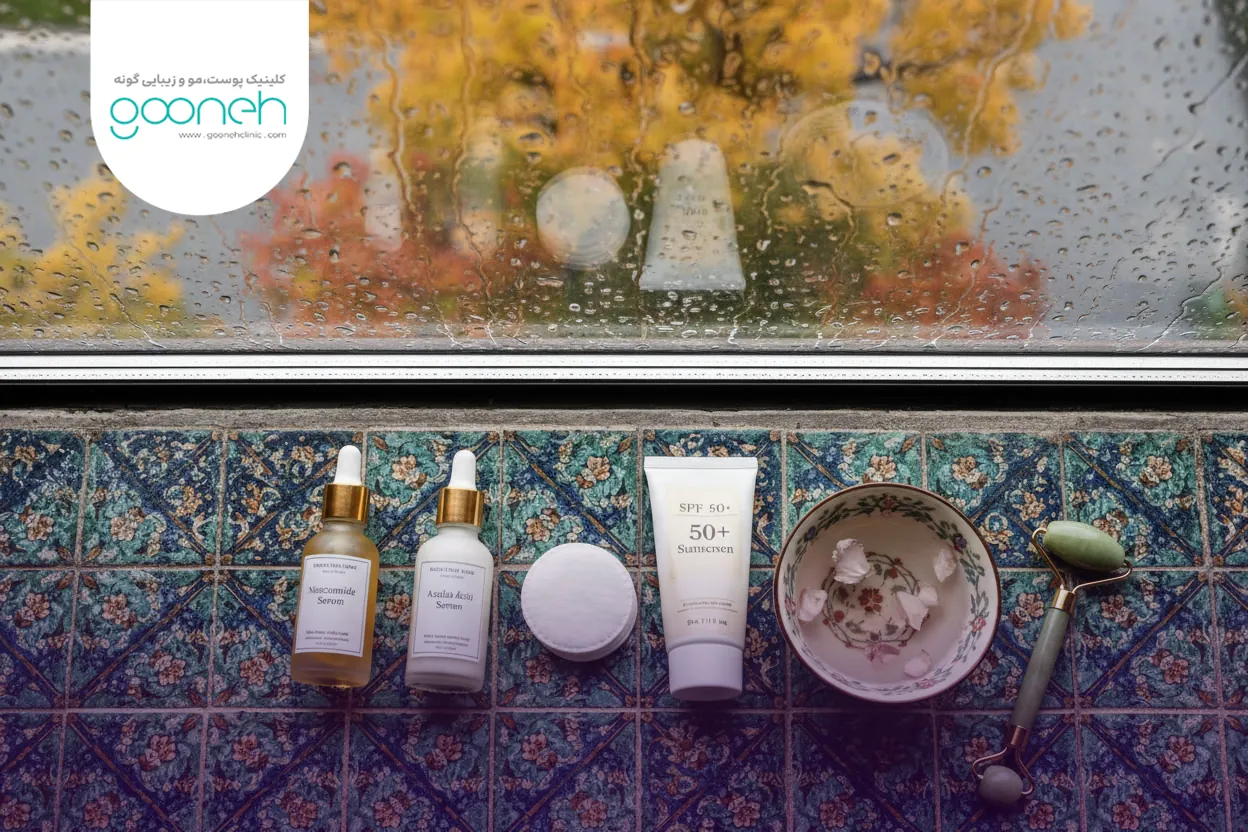
Frequently Asked Questions
درمان جای جوش صورت که سیاه شده چقدر زمان می برد؟
به نوع لک، رنگ پوست، شدت التهاب و پیوستگی در ضدآفتاب و روتین بستگی دارد. معمولاً لک های تیره به زمان و تداوم نیاز دارند و «درمان یک شبه» واقع بینانه نیست.
آیا آبلیمو، جوش شیرین یا سرکه سیب واقعاً لک جای جوش را از بین می برد؟
این مواد می توانند پوست را تحریک کنند و حتی لک را بدتر کنند، مخصوصاً اگر بعدش پوست در معرض نور قرار بگیرد. اگر دنبال روش خانگی هستید، گزینه های کم خطرتر و استانداردتر (مثل آلوئه ورا فرموله شده یا محصولات ملایم) بهترند.
رتینول برای لک جای جوش خوب است؟ چه نکته ای را باید رعایت کنم؟
بله، می تواند به بازسازی پوست و کم رنگ شدن لک کمک کند؛ اما باید تدریجی شروع شود، با مرطوب کننده همراه شود و ضدآفتاب در طول روز الزامی است. در بارداری معمولاً توصیه نمی شود.