
Treatment for Acne Scars and Facial Pitting: From Identifying Scar Types to the Best Clinical Methods
Treatment for Acne Scars and Facial Pitting
Pits and indentations left behind by acne (pimples) usually do not disappear “completely” on their own. However, for most people, choosing the right treatment can make the skin look noticeably smoother and more even. The important point is that treating acne scars and facial pits is not like treating an active pimple, which can be resolved with a cream or a short course of treatment; acne scarring means the skin’s structure has changed, and improvement requires targeted collagen stimulation or the release of fibrous tissue beneath the scars.
At Gooneh Clinic, the treatment approach is usually “combined”; meaning that depending on the type of scar (ice-pick scars, rolling scars, or broad depressions), skin tone, history of post-inflammatory hyperpigmentation, and skin sensitivity, several complementary techniques may be used to reduce the depth of the pits and improve skin texture.
| Method | Which type of acne scar is it more suitable for? | Main benefit | Limitation/important note |
|---|---|---|---|
| Subcision | Rolling scars and tethered depressions | Releases adhesions beneath the scar and elevates the base of the depression | Bruising for several days is normal; repeat sessions may sometimes be needed |
| Microneedling | Superficial to moderate scars + uneven texture | Stimulates collagen production with minimal downtime | Not sufficient on its own for very deep scars |
| Fractional CO2 Laser | Moderate to deep scars + enlarged pores | Stronger skin resurfacing and texture improvement | Sunscreen care and a restorative skincare routine are essential |
| Chemical Peeling | Post-acne dark spots + superficial unevenness | Brighter, more even skin surface | Has limited effects on deep pits |
| Filler (gel) | Some distinct depressions or localized hollowing | Quick, visible results | The effect is temporary and is best performed on prepared scars |
| PRP | Supporting the healing process alongside other treatments | Helps improve skin quality using the individual’s own blood platelets | Usually not the primary scar treatment; it has a supportive role |
What Exactly Are Facial Pits and Why Do They Form?
When deep, inflamed pimples develop (such as cystic or nodular acne), inflammation can damage the deeper layers of the skin. The body produces collagen to repair the damage. If “less than needed” collagen is produced, the damaged area becomes depressed and pits form. If “too much” collagen is produced, raised scars (excess tissue or hypertrophic/keloid scars) occur.
Common factors that increase the likelihood of pitted acne scars include:
- Picking at and squeezing pus-filled, deep pimples
- Delaying treatment for active acne and allowing inflammation to persist for a long time
- Genetics (some people are prone to scarring)
- Cystic/nodular acne and more severe infections
- Aging and the natural reduction in collagen production
- Inadequate skincare during acne outbreaks (such as not using sunscreen and repeated irritation)
Types of Acne Scars and Facial Pits (Why Is Identifying the Scar Type Important?)
Many sources treat all scars as the same, whereas the “type” of scar determines which method will be most effective. Simply put, acne pits generally fall into three main categories:
- Rolling: Broad, wavy depressions that are often caused by tissue tethering beneath the skin; subcision is usually the best foundational treatment.
- Boxcar: Depressions with relatively defined edges; depending on their depth, a combination of fractional laser and microneedling/subcision can help.
- Ice pick: Narrow, deep pits resembling needle holes; these are usually the most difficult type to treat and may sometimes require more specialized methods (such as focal or combination techniques).
In addition to pits, post-acne marks (redness or darkening) may also be present. Marks differ from pits: marks improve more with skincare, sunscreen, brightening treatments/peels, whereas pits require structural remodeling.
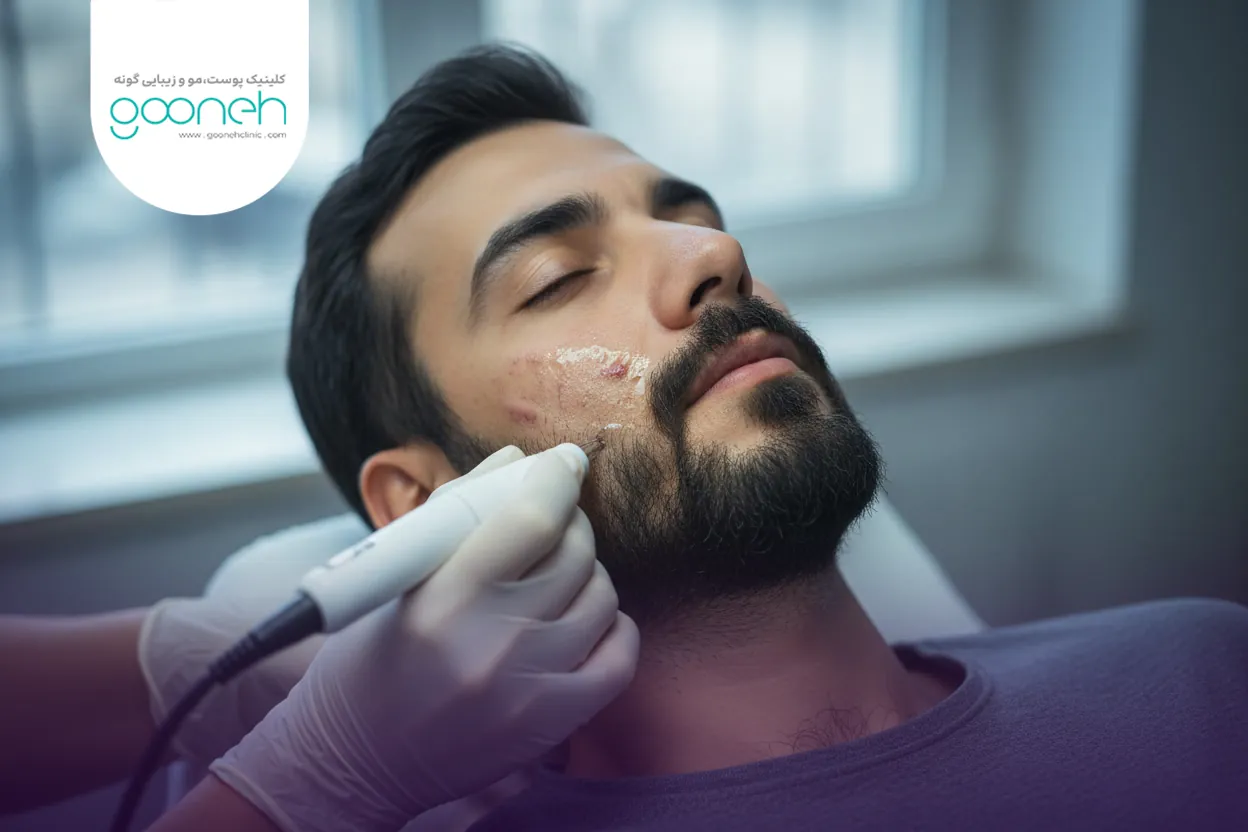
The Best Clinical Methods for Treating Acne Scars and Facial Pitting
For better results, several techniques are typically combined in stages. The ultimate goals are to:
- Release adhesions beneath scars (if present)
- Stimulate controlled collagen production
- Make the skin surface look more even and pores appear smaller
- Minimize the risk of post-treatment pigmentation
1) Acne Scar Subcision
Subcision is a procedure in which a needle or cannula is used to release fibrous adhesions beneath a scar. In many rolling scars, the main issue is “tethering”; the base of the depression is attached to underlying layers and cannot rise. With subcision, these attachments are severed, while the body simultaneously begins producing collagen for repair.
What should you expect? Bruising and mild swelling for several days are usually normal. Some people may need repeated sessions, especially if the pits are old and deep.
2) Microneedling
During microneedling, very fine needles create controlled, superficial microchannels in the skin so that the body naturally enters the repair phase and produces new collagen. This method can be useful for improving overall skin texture, superficial to moderate scars, and even enlarged pores, and its recovery period is usually shorter than that of many invasive procedures.
Microneedling is sometimes combined with strengthening agents (such as specialized serums or restorative formulations); however, the key point is that it must be performed properly and under fully sterile conditions to avoid increasing the risk of inflammation and pigmentation.
3) Laser Treatment for Acne Scars (Especially Fractional CO2 Laser)
Fractional lasers create extremely fine columns of energy in the skin, activating deeper remodeling and accelerating renewal without removing the entire skin surface at once. Among common options, CO2 laser is a well-known treatment for acne scars, uneven texture, and pores.
Important note: Laser treatment is not the same for everyone. Skin prone to pigmentation (especially darker skin types) requires precise parameter adjustment and more diligent post-treatment care. It is also generally recommended to avoid invasive lasers while severe active acne is present.
4) Chemical Peeling
Peeling involves the controlled use of medical acids to remove superficial layers and stimulate renewal. This method is useful for post-acne marks, dull skin, and superficial unevenness. However, if the pits are deep, peeling alone is not enough and is better used alongside subcision/microneedling/laser treatment.
5) Dermabrasion and Microdermabrasion
Microdermabrasion is a superficial mechanical exfoliation treatment that can help improve skin radiance and evenness, making it a good adjunctive option for some very superficial scars or mild marks. However, its effect on deep pits is generally limited.
Dermabrasion is more invasive and must be performed after careful assessment, because excessive depth of removal increases the risk of irritation, pigmentation, or unevenness.
6) Filler Injections to Fill Depressions
For some individuals, after preparing the skin with restorative procedures (such as subcision and laser treatment), fillers can be used for certain distinct hollows to produce a quicker, smoother-looking result. Fillers do not treat the “cause” of scarring, but they can improve the appearance of depressions. Their longevity depends on the material type and the body’s condition, and they are usually not permanent.
7) PRP as an Adjunctive Treatment
PRP (platelet-rich plasma) is prepared from the individual’s own blood and can support healing and improve skin quality, especially when used alongside methods such as microneedling or after certain treatments. PRP should not be considered the primary treatment for deep pits, but rather a booster for the remodeling process.
Why Does “Combination Treatment” Usually Produce the Best Results?
Because many people have a combination of several scar types: for example, rolling scars (requiring subcision), enlarged pores and uneven texture (requiring laser or microneedling), as well as pigmentation (requiring an anti-pigmentation routine and sunscreen). Therefore, a single method usually cannot address all concerns at once.

Proper Treatment Steps (From Consultation to Final Results)
For acne scar and facial pitting treatment to truly be effective while keeping the risk of complications low, it is best to follow a logical, step-by-step approach.
Suggested Steps in Order
- Control active acne: If you still have deep, inflammatory pimples, new scar formation must first be prevented.
- Identify the scar type and severity: The physician determines whether you have rolling/boxcar/ice-pick scars or a combination, and assesses their depth.
- Select a treatment plan: This may include a combination of subcision + microneedling or laser + topical medical care.
- Begin structural (deep) treatments: Subcision is usually the foundation for tethered pits, followed by collagen-stimulating methods.
- Improve pigmentation and skin tone: During or after the main phase, a brightening routine and diligent sunscreen use become important.
- Reassess and make targeted corrections: If a few resistant depressions remain, more targeted treatments or fillers may be considered.
How Long Does It Take to See Changes?
Initial changes may be noticeable after the first session or within a few weeks, but collagen remodeling takes time. Therefore, real results are usually gradual and improve as sessions are completed and aftercare is followed. If someone promises “complete removal in one session,” it is best to proceed with caution.
Home and Traditional Remedies: What Can They Realistically Help With?
Many online articles present oils and homemade masks as the main treatment for facial pits. The reality is that true pits (atrophic scars) are usually not “filled” with home remedies because the issue lies in the deeper skin structure. However, home care can:
- Reduce inflammation and help prevent new pimples
- Reduce dryness and skin irritation
- Help repair the skin barrier
- Improve and prolong results when used alongside clinical treatments
Common Home Ingredients and Safety Tips
Ingredients such as aloe vera, honey, or some lightweight oils may help soothe the skin and reduce dryness. However, there are several important warnings:
- Lemon juice and apple cider vinegar, when used directly, can cause irritation, chemical burns, and pigmentation, especially on sensitive skin or after laser/peeling.
- Topical vitamin E is not suitable for everyone and can cause pimples or contact inflammation in some people; its definite effectiveness for filling acne pits has also not been proven.
- Anything that creates “harsh scrubbing” (such as salt or coarse particles) can worsen inflammation and make pigmentation and scars worse.
If you wish to use home remedies, it is best to view them as an aid for soothing and strengthening the skin, not as a definitive treatment for pits.
Care Before and After Clinical Treatments (to Reduce Pigmentation and Side Effects)
A large part of the outcome of acne scar and facial pitting treatment depends on your aftercare, especially if your skin is prone to post-inflammatory pigmentation.
What Should Be Done Before Treatment?
- If you take medications (especially certain skin medications), inform your physician.
- Do not irritate the skin in the days leading up to treatment (harsh scrubs, facial waxing, or picking at pimples).
- If you have a history of cold sores, be sure to tell your physician before laser or invasive treatments.
- Avoid sunbathing and tanning beds; sun-exposed skin has a higher risk of pigmentation.
What Should Be Done After Treatment?
- Regular sunscreen use (as recommended by your physician) is the most important measure for preventing pigmentation.
- Avoid saunas, strenuous exercise, and intense heat for a few days (depending on the treatment type).
- Do not pick at your skin or peel off flakes; this can create pigmentation and new marks.
- Use a gentle cleanser and the recommended restorative cream.
- If you experience severe redness, unusual pain, discharge, or signs of infection, medical follow-up is necessary.
Who Is a Suitable Candidate for Treatment and Who Should Be Cautious?
Suitable Candidates
- Individuals whose active acne is controlled or mild
- Individuals with realistic expectations (gradual improvement, not an instant miracle)
- Individuals who can diligently follow post-treatment care and sunscreen use
Cases Requiring Caution/Treatment Deferral (at the Physician’s Discretion)
- Severe, active acne (risk of inflammation and new scars)
- A history of raised scars or keloids (some methods must be selected cautiously)
- Severely sunburned or tanned skin
- An active skin infection in the treatment area
What Factors Affect the Cost of Acne Scar and Facial Pitting Treatment?
A fixed cost cannot be given for treating acne scars and facial pits because the cost depends on several factors, including:
- Type of method (laser, subcision, microneedling, combination treatment, etc.)
- Severity and depth of the scars and the extent of the affected area
- Number of required sessions
- Equipment and technology used
- Consumable materials (if fillers or specialized products are needed)
- The physician’s experience and treatment protocol
- The clinic’s geographical location
The best approach is an examination and a personalized treatment plan.
How Can You Prevent Acne Scars From Worsening and New Pits From Forming?
If you still have acne, prevention is the most valuable treatment. Here are a few simple but effective tips:
- Do not pick at inflamed pimples (squeezing pimples is one of the main causes of scarring).
- Treat acne seriously and consistently, not intermittently.
- Use sunscreen every day to prevent post-acne marks from becoming established.
- If you have peeling or skin irritation, make your routine gentler; ongoing irritation means more inflammation.
For individuals who have both post-acne marks and old acne scars, reading these articles may also be helpful: Removing acne scars at home as quickly as possible and Homemade mask for acne and acne scars.

Frequently Asked Questions
آیا درمان جای جوش و چاله های صورت صددرصدی است؟
معمولاً هدف درمان، «بهبود قابل توجه» و صاف تر شدن ظاهر پوست است. میزان پاسخ به نوع اسکار، عمق آن، سن اسکار، نوع پوست و همکاری شما در مراقبت های بعد از درمان بستگی دارد و برای همه یکسان نیست.
برای شروع درمان جای جوش و چاله های صورت باید صبر کنم تا جوش ها کاملاً قطع شوند؟
اگر جوش های فعال شدید و التهابی دارید، بهتر است ابتدا آکنه کنترل شود. در موارد خفیف، ممکن است برخی درمان های ملایم تر با نظر پزشک قابل انجام باشد.
کدام روش برای چاله های عمیق موثرتر است: سابسیژن، میکرونیدلینگ یا لیزر؟
برای چاله های چسبنده و موج دار، سابسیژن معمولاً پایه درمان است. برای بهبود بافت و منافذ، میکرونیدلینگ یا لیزر (مثل CO2 فرکشنال) اضافه می شود. انتخاب دقیق به نوع اسکار شما بستگی دارد و اغلب ترکیبی است.
آیا روش های خانگی مثل عسل، آلوئه ورا یا روغن ها چاله ها را پر می کنند؟
معمولاً چاله های واقعی را پر نمی کنند، اما می توانند به کاهش التهاب، کمک به ترمیم سطحی و بهتر شدن کیفیت پوست در کنار درمان های کلینیکی کمک کنند. برخی مواد تحریک کننده مثل آبلیمو یا سرکه سیب می توانند لک و التهاب ایجاد کنند.