
What Is the Best Treatment for Removing Acne Scars? (A Complete Guide to Choosing Home and Clinical Methods)
Best Treatment for Removing Acne Scars
If you have searched for the phrase “best treatment for removing acne scars,” you probably have a clear goal: smoother, more even skin and faded acne marks. The important point is that “acne scars” are not all the same; some people only have brown spots or redness after pimples, while others have depressed scars (pitted scars) or raised scars. Each one requires its own treatment, and this is exactly where many home remedies or heavily advertised creams fail.
In this article, we explain in a fully practical way:
- What type of acne scar you have and how to identify it
- What the best and most sensible treatment is for each type (home, medical, clinical)
- What can make results faster and safer
- What mistakes can worsen spots and scars
| Type of post-acne concern | Appearance on the skin | Best treatment approach | Approximate time to see changes | Key point |
|---|---|---|---|---|
| Post-acne redness (PIE) | Pink/red spots | Sunscreen + gentle skincare + light/medical treatments if needed | Several weeks to several months | Sun exposure and picking prolong redness |
| Post-acne brown spots (PIH) | Brown/dark spots | Sunscreen + dark-spot ingredients + controlled exfoliation | Several weeks to several months | Without sunscreen, dark-spot treatments become less effective |
| Superficial depressed scars | Mild unevenness | Microneedling/suitable peels + a restorative routine | Several months (gradually) | Collagen stimulation takes time |
| Deep depressed scars (ice-pick/boxcar) | Deep, noticeable pits | Combination treatment: subcision/punch + fractional laser | Several months to a full treatment course | One method alone is often not enough |
| Raised scars/keloids | Firm raised areas | Specialized medical treatments (injections/inflammation control) | Variable | Ablative lasers may worsen them if not chosen correctly |
First, Identify Which Type of “Acne Scar” You Have
To choose the best treatment for removing facial acne scars, we need to know whether we are dealing with discoloration or indentation/raised scarring. This distinction is simple:
1) Post-acne spots and discoloration (colored acne marks)
Sometimes a pimple goes away, but a spot remains:
- Redness or pinkness: usually caused by lingering inflammation and changes in superficial blood vessels.
- Brown or dark marks: caused by increased pigment (melanin) after inflammation, especially in olive and darker skin tones.
These conditions usually improve greatly with the right routine and good sunscreen and do not necessarily require an invasive method.
2) Depressed scars (pitted acne scars)
If you run your hand over your skin and feel unevenness, or notice tiny shadows and depressions in the light, it means there is tissue loss. These typically do not become smooth with simple creams alone and more often need collagen-stimulating treatments (such as microneedling) or methods that release adhesions beneath the skin (such as subcision).
3) Raised scars
In some people, instead of losing tissue, the skin produces too much collagen and the scar becomes raised. This group requires different treatment, and self-treatment can prolong the problem.
The Golden Rule Before Treatment: Control Active Acne First
One of the main reasons for not getting results is that active acne is still present while treating scars. Every new pimple can create a new mark, and active inflammation can also reduce the effectiveness of treatments such as laser therapy or microneedling.
If you have active acne (especially pus-filled, painful pimples or nodules), it is better to first establish an acne treatment plan and then move on to acne-scar treatment. Sometimes, however, certain methods can be performed simultaneously under a doctor’s supervision, but the decision should be personalized.
The Best Treatment for Removing Facial Acne Scars Based on Scar Type
Below, we explain the methods from minimally invasive to specialized in simple language and indicate which types of acne scars they are best suited for.
A) Home Treatments and Low-Risk Care (for Mild Spots and Redness)
If chosen correctly, home treatment can help with superficial spots and colored acne marks; however, have realistic expectations for deep pits: home treatments usually do not “smooth out” pitted scars, but only improve the overall appearance of the skin.
What is genuinely useful at home?
- Daily sunscreen (even indoors near a window): the most important step for fading brown spots and preventing them from becoming darker.
- A gentle cleanser and avoiding harsh scrubs: mechanical irritation increases inflammation.
- Hydration and a lightweight moisturizer: dehydrated skin becomes more sensitive, and spots may appear more persistent.
- Aloe vera (for people who tolerate it): may be soothing and help with superficial repair.
- Topical vitamin C (if tolerated): helps brighten and even out skin tone.
Things at home that may make it worse
Some remedies, such as lemon juice, apple cider vinegar, or very acidic homemade mixtures, can cause irritation, chemical burns, and darker spots, especially on sensitive skin. If your goal is the “best treatment for removing acne scars,” anything that causes inflammation usually works against that goal.
B) Medical Treatments and Creams (Suitable for Spots and Very Superficial Scars)
Creams and serums are most helpful in two areas:
- Fading spots (brown/dark)
- Improving surface texture and making the skin more even
Ingredients commonly found in anti-acne-mark routines
- Retinoids (such as retinol/tretinoin): help renew the skin and are useful for spots and mild uneven surface texture. They may cause dryness and peeling at first.
- AHA/BHA (such as lactic acid, salicylic acid): provide controlled exfoliation and help with spots and pores. Overuse means irritation and more discoloration.
- Repairing products: help support the skin barrier and reduce inflammation after acne or clinical treatments.
If you would like more detailed information on choosing ointments and brightening products, this article may help: Ointment for Removing Brown Acne Marks.
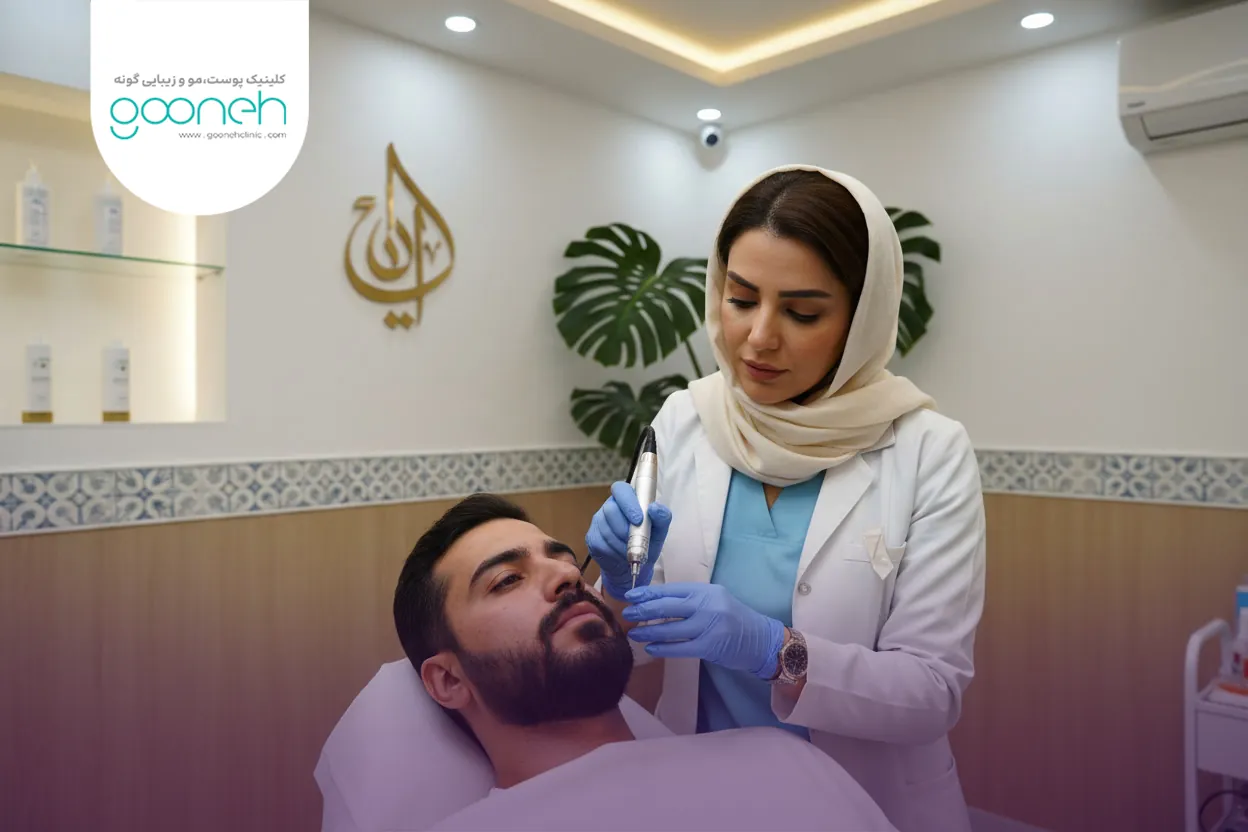
C) Microneedling (for Depressed Scars and Uneven Skin Texture)
By creating very tiny, controlled punctures in the skin, microneedling encourages the body to produce new collagen. Results are usually gradual and require several sessions. This method can be performed for many skin tones and, when done correctly, has a lower risk of long-term discoloration than some aggressive lasers.
Suitable for: mild to moderate depressed scars, enlarged pores, uneven texture.
Limitations: it is usually not enough on its own for very deep scars and should be combined with methods such as subcision or laser treatment.
D) Subcision (for Tethered Depressed Scars)
Some pitted scars develop due to adhesions in the tissue beneath the scar. In subcision, the doctor uses a special instrument to release these adhesions so the skin surface can rise. In many cases, the best results are seen when subcision is combined with collagen-stimulating or restorative methods (such as microneedling or fractional lasers).
Possible temporary side effects: bruising, swelling, and sensitivity in the area, which are usually controlled with proper care.
E) Fractional Lasers for Scars and Spots (When You Want a Stronger Treatment)
Fractional lasers stimulate renewal by creating very tiny thermal points in the skin. Depending on the laser type and skin condition, the intensity and recovery period vary.
Among well-known options, fractional CO2 laser is a common method for improving acne scars (especially uneven texture and certain types of depressions); however, it should be selected based on:
- Skin tone
- Likelihood of post-inflammatory discoloration
- Presence of active acne
- Depth and type of scar
Laser treatment without proper assessment can increase the risk of temporary discoloration or irritation. If you would like to learn more about this method, the CO2 laser service page may be useful.
F) Chemical Exfoliation (Peeling) for Spots and Superficial Scars
Peeling or chemical exfoliation can help reduce brown spots and improve surface texture. The type of substance and depth of the peel should be selected by a doctor, because a strong or unsuitable peel can cause inflammation and worsen discoloration in some people.
G) PRP as an Adjunctive Treatment
In PRP, platelet-rich plasma is prepared from the person’s own blood and injected into the skin or used alongside certain procedures to improve the repair process. PRP is usually not a “replacement” for primary scar treatments, but it may help improve skin quality in some combination plans. To learn more about this method: PRP or Platelet-Rich Plasma.
H) Filler Injections for Filling Certain Depressions (Faster but Temporary Results)
For some depressed scars, filler injections can make the skin surface appear smoother more quickly. The results are not permanent and may sometimes require maintenance. This method should be chosen according to the type and location of the scar.
The Best Home Treatment for Removing Acne Scars: Realistic and Safe
If you are looking for the “best home treatment to remove acne scars,” a practical recommendation is to create a consistent, low-risk plan instead of using harsh, acidic mixtures. At home, the main goals are:
- Reducing lingering inflammation and redness
- Preventing spots from darkening with sunscreen
- Supporting gentle skin renewal
For lower-risk ideas for homemade masks, you can read this article: Homemade Mask for Acne and Acne Scars.
Suggested Steps for Choosing the Best Treatment Method (Practical Checklist)
To avoid feeling overwhelmed, this step-by-step approach is usually helpful:
- Identify the type of acne scar: Is it a spot or a depressed/raised scar?
- Assess active acne: If you are still breaking out, control acne first.
- Start with essential basics: sunscreen, a gentle cleanser, and a suitable moisturizer.
- For spots: dark-spot ingredients/mild retinoids with a structured, tolerable routine.
- For depressed scars: assessment for microneedling, subcision, fractional laser, or a combination of these.
- Set realistic expectations: scar treatment is usually gradual; the goal is “clear improvement,” not necessarily 100% removal.
- Commit to post-treatment care: the most important factor in preventing discoloration and prolonged healing.

Care Before and After Clinical Acne-Scar Treatments
Your doctor will provide specific care instructions based on the chosen method, but these general principles are typically important for most treatments (microneedling, fractional lasers, peels):
What is usually recommended before treatment
- If you experience recurrent cold sores, be sure to inform your doctor.
- If your skin has recently had significant sun exposure or is tanned, the likelihood of discoloration increases; coordinate the timing with your doctor.
- Avoid picking at or squeezing pimples and scars.
What improves results after treatment
- Regular sunscreen use (as recommended by your doctor and reapplied appropriately)
- Avoiding irritating products until your doctor permits them (such as exfoliants or certain active ingredients)
- Keeping the skin moisturized with suitable repairing products
- Avoiding saunas, excessive heat, and strenuous exercise during the first few days (according to your doctor’s instructions)
- Being patient for results: collagen production is a gradual process
Common Mistakes That Make Acne Scars Worse
- Popping pimples and picking scabs: the main cause of deeper scarring.
- Sun exposure without sunscreen: makes spots darker and more persistent.
- Over-exfoliating: irritates the skin and worsens post-inflammatory discoloration.
- Choosing aggressive treatment without identifying the scar type: leads to less effective results and a higher chance of side effects.
Who Should Definitely Get an In-Person Specialist Assessment for Acne Scars?
If you have any of the following, it is better not to use trial and error to create your own treatment plan:
- Deep or widespread pitted scars
- Dark skin and a history of post-inflammatory discoloration
- Active, painful acne (nodules/cysts)
- Raised scars or a history of keloids
- Pregnancy or breastfeeding (due to restrictions on certain medications/products)
What Factors Affect the Cost of the Best Acne-Scar Treatment?
Because scar types vary from person to person, the cost is not fixed and may change based on these factors:
- Type of treatment (creams and routines, microneedling, subcision, laser, etc.)
- Severity and extent of the scars
- Number of sessions needed
- Equipment and technology used
- The doctor’s skill and experience
- Need for combination treatments or complementary care
Frequently Asked Questions
آیا بهترین درمان برای از بین بردن جای جوش یک روش ثابت برای همه است؟
خیر. بهترین درمان به نوع جای جوش (لک، قرمزی، اسکار فرورفته یا برجسته)، شدت مشکل، رنگ پوست و وجود جوش فعال بستگی دارد. بسیاری از افراد برای نتیجه بهتر به درمان ترکیبی نیاز دارند.
برای جای جوش قهوه ای، درمان خانگی بهتر است یا درمان کلینیکی؟
اگر لکها سطحی و تازه باشند، روتین خانگی اصولی (خصوصاً ضدآفتاب) و محصولات ضدلک میتواند بسیار کمک کند. اگر لکها مقاوم یا همراه با ناهمواری باشند، درمانهای تخصصی میتواند سریعتر و مؤثرتر باشد.
میکرونیدلینگ برای جای جوش چقدر زمان میبرد تا اثر کند؟
میکرونیدلینگ معمولاً اثر تدریجی دارد، چون بر پایه کلاژنسازی است. خیلی از افراد طی چند جلسه و طی چند ماه تغییرات را واضحتر میبینند.